Atmanirbhar Bharat and the Great Tech Standards Game
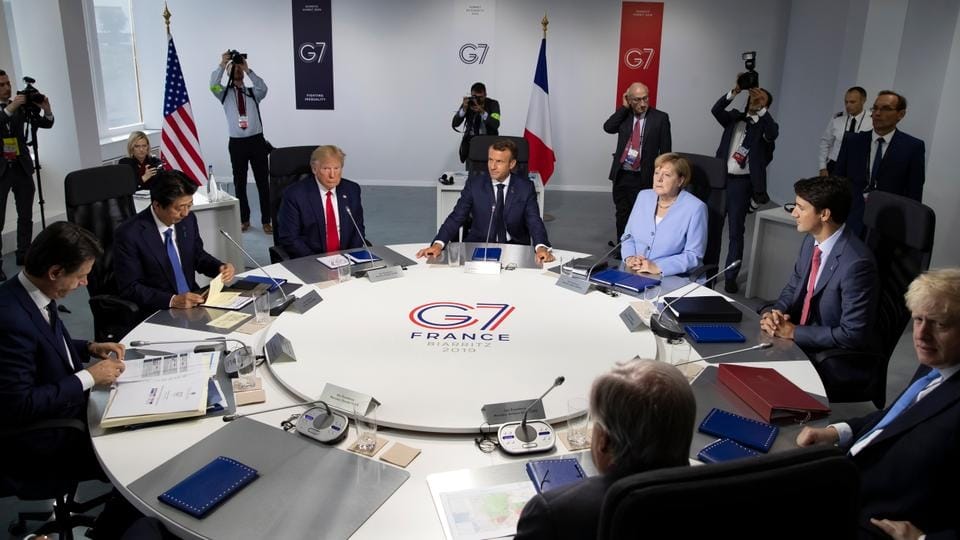
The Group of Seven (G7) countries have escalated their long-simmering techno-economic feud with China and its allies. They are prudently exercising strategies based on their suspicion about the latter’s deliberate miscommunication during the early stages of the COVID-19 pandemic. They have persuaded their multi-national companies to bring back manufacturing facilities home from China or shift to other friendly countries. By doing so, the G7 intends to reinvigorate domestic employment figures, boost consumption, and support the recessionary national economies weakened by the pandemic. The G7 is also considering forming a power grouping of democratic nations, including South Korea, Australia, and India, with whom it can share fifth-generation (5G) telecom technology markets. None of these developments can be deemed as reactionary moves.
China’s manufacturing prowess and its hegemonic ambitions were well known, but its ability to develop I4.0 technologies and sway global technology standards in its favour has triggered a startling alarm in advanced manufacturing and innovation-driven countries around the world. The alarm sounded loudly in 2016 when China’s Huawei obtained approval for its ‘polar code’ mathematical protocol over US-based Qualcomm’s ‘low-density parity check’ on the Third Generation Partnership Project (an international body for information and communication technology industry standards). China’s success in eliciting this surprise escalated its Cold War with the US. Since then, these two countries and their allies have made technology standards a battlefield.
Technology standards are globally accepted systems and protocols that facilitate interconnections, functions, and operations, upon which various technology applications are developed and upgraded on a timely basis. They are approved by international technology standard bodies via democratic processes where member countries can submit the designs and protocols of new technologies, and the most technically and economically viable of them is approved for global utilisation. Simply put, technology standards are critical bridges between an invention and its evolution towards the manufacturing stage. Countries that can develop these technologies and get them approved on global bodies ultimately earn the most techno-economic dividends from them. China’s techno-economic growth would have been an inspirational story had it been a follower of a rules-based global order. But, Huawei and other Chinese technology companies are the People’s Liberation Army’s nom de guerre and are entities furthering the Communist Party of China’s hegemonic aspirations. Their competence in I4.0 technologies, ability to influence global technology standards bodies, use of competitive pricing tactics to dominate the global market, and ultimately their utilisation of I4.0 technologies to achieve their global geopolitical ambitions, are a cause of immense distress not only to the G7 but also to the rules-based world order, including India.
India can join the proposed G7+3 technology grouping, as it can benefit from it geopolitically in the short term. However, this speedy gratification should be aligned with the nation’s metastrategic needs, befitting its growing stature and influence on the planet.
The Government of India, in recent years, has had plans to utilise ' Make in India' as a strategy to achieve a $ 5 trillion economy by 2024. Make in India was aimed at inviting overseas companies owning I4.0 standards and intellectual property to manufacture in India. Thereafter, it set time-bound decadal targets, aiming to evolve into a global high-technology manufacturing hub, followed by a high-technology self-reliance drive, and eventually become a knowledge superpower by 2050. These plans have been altered due to the global economic disruption caused by COVID-19. The disruption has lowered global confidence in China and, in quick succession, placed India in a geopolitically advantageous position. However, India is expressing prudence in acknowledging that Make in India may not help it fully capitalise on this advantageous position, and it must immediately accelerate its economy to the next stage of self-reliance. This prudence was explicated by Prime Minister Narendra Modi in his public pronouncement of Aatmanirbhar Bharat.
India should recognise that replicating innovations and reducing import dependency by increasing domestic manufacturing are low-hanging fruits of Atmanirbhar Bharat. Neither Make in India nor the low-hanging fruits of Atmanirbhar Bharat can make India a consequential player in the hotly contested and pandemic-ridden cusp of the Fourth Industrial Age, which will pan out in this new decade of the 2020s. Despite the major global economic decline due to COVID-19, the decade will nevertheless offer a brief time window of level-playing opportunity to both advanced and advancing economies of the world to build pioneering I4.0 technologies, set technology standards, earn techno-economic dividends and dominate the global economy until the arrival of the Fifth Industrial Age, sometime in the second half of the 21st century. This is perhaps the reason why the economic slump is not disheartening countries; instead, they are raring to come back as soon as the pandemic is mitigated.
India should aim for the high-hanging fruits of Atmanirbhar Bharat and build self-reliant competencies in developing pioneering I4.0 technologies and setting global technology standards. Such competencies will be vital for India’s future security as wars are increasingly being fought not between standing armies but between two or more pioneering technology systems and technology standards. To this end, India can work simultaneously on four fronts.
Front 1 (R&D)
The Government of India can offer financial incentives, technology testing infrastructure, and provide robust market access and contracts to native next-generation I4.0-ready high-technology start-ups and companies. By shedding its role as a dole-giver and playing the dual role of mentor and angel, it should increase R&D expenditure to up to 2% of national GDP in a swift and calibrated manner. A mentor-plus-angel-like attitude will give the necessary protection to innovation emerging within the country. As a mentor, the government can offer its massive public sector academic and R&D laboratories to deep technology start-ups and private industries. As an angel, it can offer them the surety of contracts by making government agencies, ministries, and the armed forces its clientele.
Front 2 (R&D and Technology Standards Task Force)
The Government of India should establish a Technology Standards Task Force (TSTF) comprising its R&D ecosystems, the National Standardisation System, and the Indian Patent Office. The TSTF can be assigned to monitor global trends in technology standards, preempt standards emerging from all over the world, and quickly help Indian high-technology laboratories and companies validate technology standards in global bodies based on their pioneering inventions. The sentinel TSTF can also provide the validated standards with the necessary competitive edge in the global technology market.
Front 3 (R&D + TSTF + Manufacturing)
The Government of India can plug its TSTF and R&D ecosystems with its high-technology manufacturing industries. This in-sync trio can help industries swiftly and flexibly adapt their manufacturing systems to new standardised technologies and smoothly transition from outdated technology systems. Reforms on this front will help India become a ‘pioneer exporter’ of indigenously invented and innovated high technologies.
Front 4 (R&D + TSTF + Manufacturing + Technology Diplomatic Corps)
The Government of India should nurture a new cohort of science and technology diplomats outside the conventional Indian Foreign Service. They can be recruited via lateral entries and slotted according to their domain expertise. These new-age diplomats will represent India in multilateral scientific and technological standards bodies and eventually attain presidencies and leadership of these bodies for India. They can be backed by proactive government support, consultations from the task force and the Ministry of External Affairs, as well as other innovation-intensive ministries of the Government of India. The TSTF, R&D ecosystems, manufacturing ecosystems, and the new science and technology diplomatic cohort can collectively engage in and monitor developments across Track 2 (business-to-business or academia-to-academia), Track 1.5 (business/academia + government with counterparts), and Track 1 (government-to-government) engagements. India, through these engagement channels, will be able to forge partnerships with friendly nations in responsibly upholding the progress of global technology standards across the spectrum of sciences and engineering and based on a rules-based global order.
India’s aspiration to become a knowledge superpower involves developing pioneering technologies, manufacturing them domestically and through the worldwide subsidiaries of Indian multinational companies, and setting global technology standards. In this pursuit, there cannot be any space for the absurd fascination for shoddy jugaad and deeming deep science R&D as too fantastic. Both of these incorrect notions have hindered the strategic detailing necessary for high-tech indigenisation and given technology standards the necessary significance in the nation's technological, economic, and military plans. No more. Aatmanirbhar Bharat must set off technology standardisation plans now.
The original piece was published by NewsBharati.


