India's Vyomanauts for Space Tourism
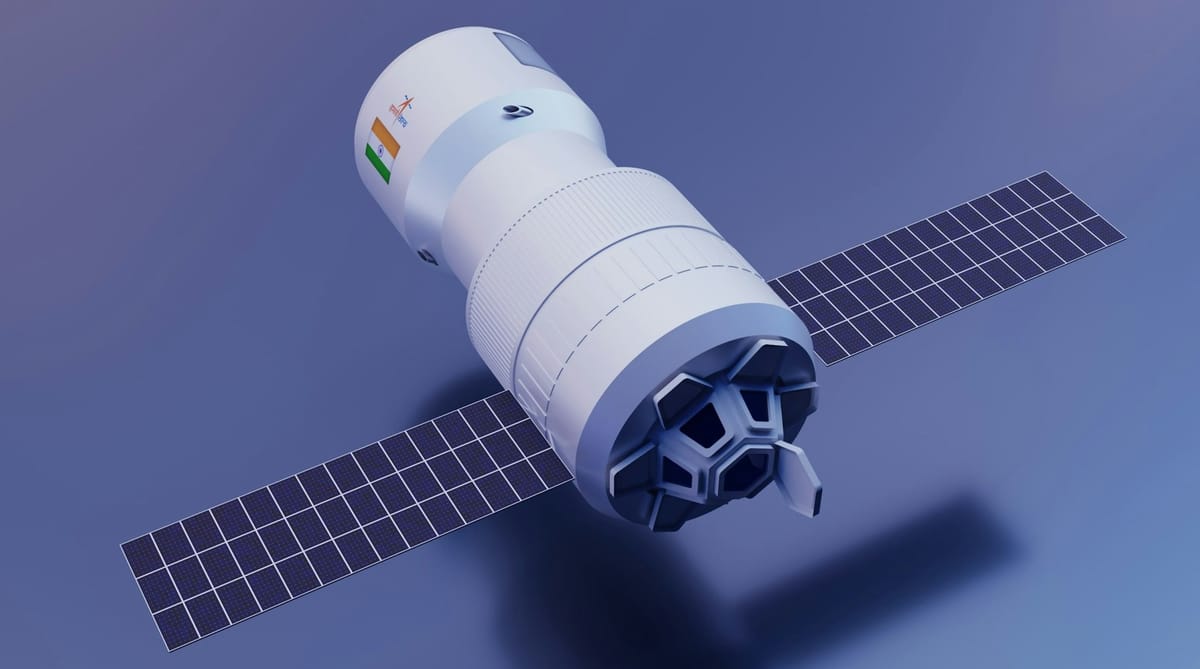
The Indian government views space tourism as a natural progression of the Gaganyaan mission scheduled for 2023-24. Space tourism is known as a luxurious pursuit for billionaires. But, the vigorous commercialisation of astronautical, sub-orbital, orbital, and cis-lunar activities demands a more excellent supply of trained spacecraft crews. India should explore the lucrative market for such trained vyomanauts, benefiting both India's space industry and the global one.
Finally, in the last week of July 2022, the Indian government, seemingly out of the blue, made a positive statement about promoting space tourism. Union Minister responsible for the Department of Space, Dr. Jitendra Singh, while responding to a question raised in the Rajya Sabha (the upper house of the Indian parliament), made an interesting official statement. He said that the Indian Space Research Organisation is preparing to develop indigenous technological capabilities for space tourism and the Gaganyaan mission, which will demonstrate human spaceflight capability in the Low Earth Orbit (LEO). His answer also hinted that the Draft Space Policy is quite comprehensive and will have provisions for the Indian private sector for their increased participation in the national and international space economy.
Some immediately began questioning whether we could afford the luxury called space tourism. Some asked why India should compete with the well-fed Western techno-wizards. Some said we are still low on socio-economic indices to fall for this vanity! As I patiently read these sceptics, I was reminded of the late 2000s and early 2010s, when the same sceptics suddenly reminisced about the lack of toilets as the nation prepared to visit the Moon and Mars. I always felt that the earlier dispensations were not questioned about the lack of basic civic infrastructure. I pondered why our people's space aspirations should get buried under the deliberate mismanagement of the previous dispensations. The excellent part today is that, with the successful construction of millions of public toilets under the Swachh Bharat Mission, the debate about toilets occupying space is a thing of the past.
Be that as it may, this is how I tried to answer. First, let us not look at Gaganyaan as just a mission. It will branch into numerous enterprises, including cis-lunar and Martian spaceflight, space-based manufacturing, and commercial 'human-in-the-loop' services, such as space tourism. When the Indian government announces its interest in space tourism, please do not take it entirely as orbital joyrides for the super-rich and their families. Space tourism will emerge with niche attributes of business, extreme, and adventure tourism. It will demand that the so-called tourist undergo physiological and psychological rigours, a few hundred hours of microgravity training, the expertise valued by the touring cohort, and a purpose for going up there.
Let's do a professional profiling of the crew preparing for the commercial human spaceflight series of missions, known as the Polaris Program, operated by SpaceX. Let's start with Jared Isaacman, the commander of SpaceX's Inspiration4 mission (2021) and the Polaris Dawn mission, scheduled for launch late in 2022. Isaacman is no leisure traveller with money, and studying his company, Draken International, helps us understand what he is aiming for. Draken is a commercial company that trains pilots for contractual tactical aircraft services. In short, he trains pilots who would eventually use fighter aircraft for tactical operations. Draken's trainers are usually from the US military, but the benefits are appreciated by forces, intelligence agencies, and private military contractors. With Isaacman's participation as the commander of commercial space missions, it is palpable that he may be looking for a natural extension of his business at Draken. Perhaps Draken or a sister concern of Draken may emerge to begin training commercial astronauts for a variety of orbital and cislunar services for the US military, NASA, SpaceX, and other agencies, not necessarily for tactical operations.
Virgin Galactic is another major player in commercial human spaceflight. They have established a niche in sub-orbital flights (operating at altitudes below 120 km) for nearly two decades. Their signature-looking suborbital spaceships have been made in the news and have become pop-culture symbols in their own right. In August 2022, Virgin Galactic announced plans to establish an astronaut campus near Spaceport America in California. Why do you think will be taught on campus? The campus is likely to groom batches of next-gen commercial astronauts. There is a great demand for such well-trained commercial astronauts to operate sub-orbital spaceflights and manage payload services. Who are the customers? Universities, research institutions, pharmaceutical companies, material science companies, speciality chemical companies, electronic companies, the military, and the list unrolls for tens of meters.
A dedicated corps of commercial astronauts will eventually become the backbone of Virgin Galactic, SpaceX, Blue Origin, Axiom Space, and all other companies engaging in commercial human spaceflight. They will not necessarily assume the role of cabin crew, as is expected from space tourism. Still, they will be support staff for various companies and non-private entities intending to carry out in-space manufacturing or R&D activities. Therefore, many qualified air pilots, experienced astronauts, and astronautically skilled crew members with experience in ground segment control, space medicine, onboard engineering, payload operations, and management, as well as commanding spaceships, are showing interest in joining the corps.
Draken's Isaacman has hit the right note, at least one that Indian space policymakers should latch on to. By the second half of this century, astronautics is expected to be a lucrative employment sector. Of course, bound for space, their roles will be akin but sophisticated versions of today's merchant shippers, engineers, yacht and cruise crew, submariners, offshore workers, expeditionary scientists, and test pilots all put in one.
The ISRO, with its newfound vigour for the commercialisation of space activities, is thinking in the right direction when it pronounces space tourism as a spin-off of the Gaganyaan mission. It would be foolhardy to think that the Indian government is the only beneficiary of human spaceflight activities. Indeed, the Indian government will play a crucial role, but achieving tangible commercial returns from post-Gaganyaan missions is the right direction to pursue. The Indian space station, which would assemble in low-Earth orbit during the 2030s, would need private sector participation as component suppliers, station builders, managers, service providers, and end-users of services. None of these activities would be possible without a dedicated Indian corps of astronauts, or Vyomanauts, as they are known. Take this as a rough estimate, but India must train nearly 40-50 vyomanauts for various sub-orbital and orbital services before the 2050s. Some should also be trained for cislunar (Earth-Moon) operations. Moreover, India would find it lucrative to train a larger cohort that would eventually get employed in the global commercial astronautics market.
There is no reason to consider space tourism a pleasure activity. There is no pleasure in the extremities of outer space. Remember Jules Verne's Twenty Thousand Leagues Under the Sea? The character, Captain Nemo, Prince of Orchha? Remember his massive museum on his submarine, the Nautilus? Now, if you had ever let your imagination run wild, the museum has been described as the most palatial in the world. But the museum just happened. It was a byproduct. Nemo's goal was to remain perpetually in motion and rule over the seas when the British East India Company usurped his kingdom in Orchcha. Irrespective of the cynicism expressed by many armchair commentators regarding space tourism, I am certain that the ambitious youth of India will line up to get employed in the domain of astronautics.
© Copyright 2022 Chaitanya Giri
All rights reserved. Any unauthorised copying or reproduction is strictly prohibited. For permission to republish (the text and not the image), please reach out to me!


